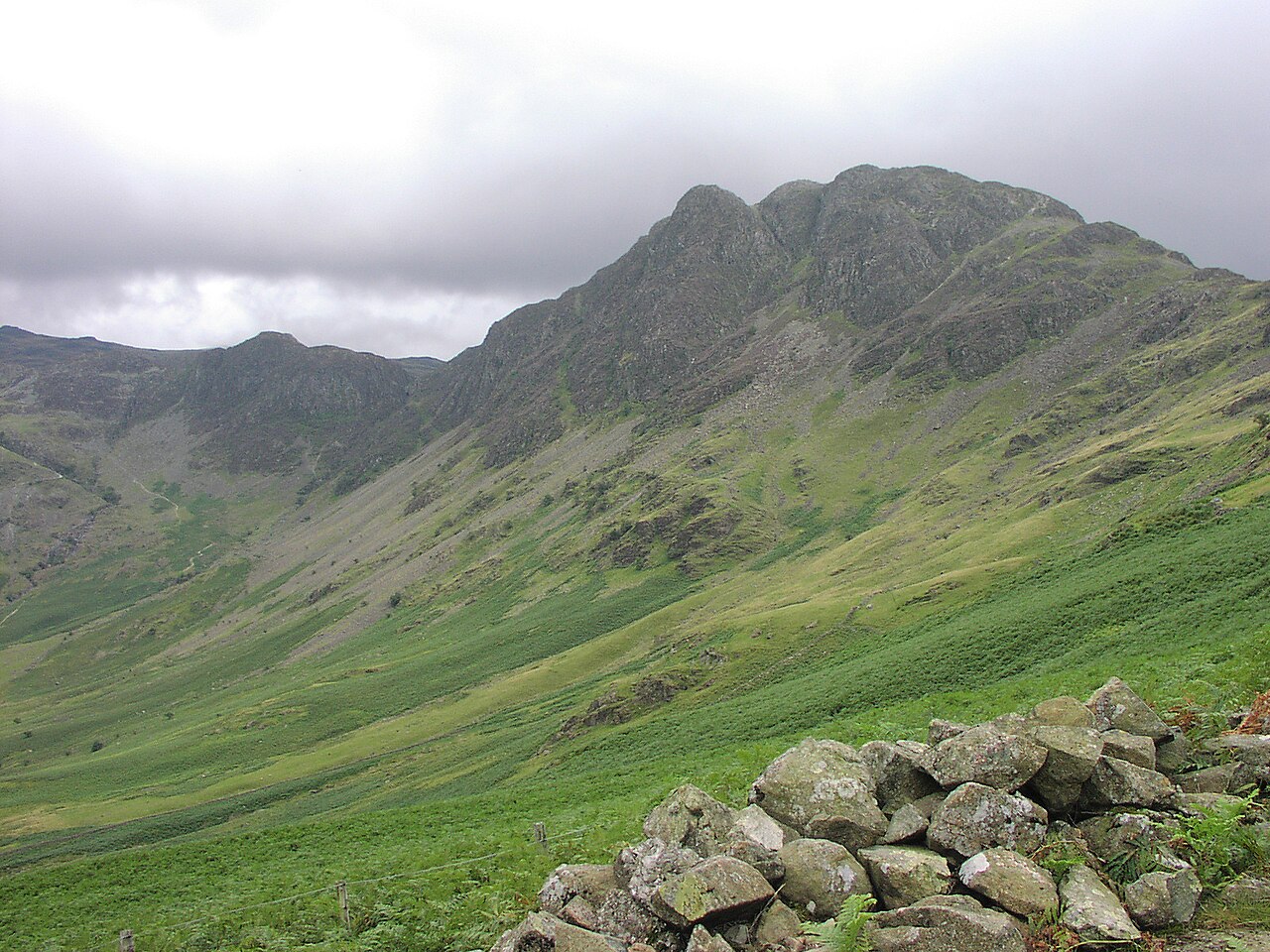
Haystacks Fell: Wainwright's Enduring Love Affair with a Lakeland Icon
Nestled in the breathtaking western reaches of the Lake District National Park, Haystacks Fell stands not as the highest peak, nor the most formidable, but as a beloved icon whose charm captivated the heart of Alfred Wainwright, the legendary fell-walking author and illustrator. For many, a visit to this rugged gem, rising to 597 metres (1,958 feet), is a pilgrimage, offering a profound connection to the wild beauty of Cumbria and the spirit of a man who immortalized it. Haystacks offers a unique blend of geological drama, captivating tarns, and panoramic vistas that truly define the Lakeland experience.
The name "Haystacks" itself evokes images of pastoral landscapes, of conical heaps of dried grass gathered for winter feed – a construction once common across European agricultural fields. While the fell's craggy, multi-faceted profile might not immediately suggest a neatly stacked farm structure, its distinctive outline, particularly from certain angles, may have inspired its evocative name, hinting at an ancient connection between the land's natural forms and human endeavors.
A Wainwrightian Testament: Innominate Tarn's Sacred Waters
Alfred Wainwright, whose acclaimed seven-volume Pictorial Guide to the Lakeland Fells became the bible for generations of walkers, held Haystacks in a truly special regard. Of all the countless peaks and valleys he meticulously documented and illustrated, it was Haystacks that he declared his absolute favourite. This deep affection wasn't merely expressed in his writing; it was solidified by his final wish: that his ashes be scattered at Innominate Tarn, a serene body of water nestled near its summit. This poignant request transformed Haystacks from a mere geographical feature into a living monument to his love for the fells.
Wainwright was captivated by Haystacks' dramatic contours, its delightful array of rocky outcrops, and the intimate scale of its landscape. He found beauty in its seemingly chaotic arrangement of crags, gullies, and small, shimmering tarns, each offering a new perspective and a sense of discovery. Unlike the grand, sweeping majesty of some of its loftier neighbours, Haystacks presented a more personal, intricate beauty – a place where one could wander, explore, and truly feel immersed in the raw, untamed spirit of the Lake District. The views from its summit, overlooking the tranquil waters of Buttermere and Crummock Water, provided a constant source of inspiration and peace, cementing its place in his heart as the ultimate Lakeland retreat.
Haystacks: A Tapestry of Ancient Stone and Glacial Artistry
Geologically, Haystacks is a fascinating study. Its rugged landscape is primarily formed from ancient volcanic andesite lavas, a testament to violent geological activity approximately 450 million years ago. These formidable rocks have since been sculpted and softened by the relentless power of glacial erosion over millennia, resulting in the distinctive topography we see today. The fell's summit area is a mosaic of these rocky outcrops, interspersed with numerous small tarns – including the famed Innominate Tarn – and steep, weathered slopes that provide both challenge and reward to the intrepid walker.
Despite its relatively modest prominence of 78 metres (the measure of its height relative to the lowest contour line connecting it to a higher peak), Haystacks possesses an undeniable character that far outweighs its raw statistics. It commands attention not through sheer scale, but through its intricate details and the sheer joy of navigating its varied terrain. From its rocky approaches to the surprisingly flat, tarn-studded summit plateau, Haystacks offers a continually evolving landscape experience. The views from the top are nothing short of spectacular, encompassing the shimmering ribbons of Buttermere and Crummock Water, the imposing bulk of Great Gable, and the distant peaks stretching towards the Irish Sea. Each turn presents a new panorama, a fresh perspective on the ancient, windswept beauty of the Lakes.
Conquering the Icon: Planning Your Walk to Haystacks
For those eager to experience Wainwright's favourite fell, there are several popular routes, each offering a unique journey to its summit. The most common starting points include Gatesgarth Farm at the head of Buttermere, or from Buttermere village itself. A slightly longer, but equally rewarding, ascent can be made from Honister Pass.
- From Gatesgarth: This popular route often involves ascending via Scarth Gap Pass before a traverse towards Haystacks. It's a challenging but highly rewarding path, with some scrambling required as you approach the summit plateau.
- From Buttermere Village: This option allows for a scenic walk along the lake shore before beginning the ascent, perhaps via a circuit that includes Fleetwith Pike or an out-and-back journey.
- From Honister Pass: For those looking for a longer day, starting from Honister Pass can involve traversing other fells, offering a more extensive exploration of the western fells before reaching Haystacks.
Tips for a Successful Ascent:
- Be Prepared: Haystacks, while not exceptionally high, is rugged. Expect uneven terrain, rocky sections, and potentially slippery ground, especially near the tarns or after rain. Sturdy walking boots with good ankle support are essential.
- Navigation: The summit area can be confusing, particularly in mist. Always carry a detailed map (OS Explorer OL4 or OL7) and a compass, and know how to use them. A GPS device or app can be a useful backup.
- Weather: Lake District weather is notoriously unpredictable. Pack waterproof and windproof layers, even on a seemingly fine day. Conditions can change rapidly, and the exposed summit can be very chilly.
- Scrambling: There are sections that require mild scrambling, meaning you'll need to use your hands for balance and upward propulsion. If you're new to scrambling, consider going with an experienced walker.
- Time: Allow ample time for your walk, typically 4-6 hours depending on your chosen route and fitness level. Factor in breaks for enjoying the views and navigating the varied terrain.
Reaching the summit and finding Innominate Tarn offers a profound sense of accomplishment and a quiet moment of reflection, understanding why Wainwright chose this particular spot for his eternal rest. The walk itself, with its constant engagement with the landscape, is a fitting tribute to his legacy.
Beyond the Fell: The Enduring Legacy of the Haystack (Agricultural Context)
While the Lake District's Haystacks is a geological marvel, the term "haystack" itself carries a rich history rooted in human agricultural ingenuity. Before the advent of modern machinery, the humble haystack was a ubiquitous feature of agricultural landscapes across Europe, a vital method for storing harvested hay and straw. These impressive structures, often conical or ridged, were built around a central wooden pole, with layers of loose hay carefully stacked and compressed to prevent moisture accumulation and promote drying. A significant skill was required to build a haystack that was not only stable but also effectively waterproof, ensuring the precious feed remained dry and nutritious for livestock through the winter months.
Historically, haystacks (sometimes also called haycocks, especially for smaller piles of drying hay, or stooks for sheaves of grain) represented a significant investment of labour and expertise, from the Neolithic period, when early farmers first began to domesticate livestock, right through to the 19th and early 20th centuries. Farmers would construct a small wall or fence around the base of the haystack to deter cattle from eating the hay prematurely. The exterior, exposed to the elements, would often turn a dull grey, but the interior retained traces of its fresh aroma and a faded green tint, a testament to the effectiveness of the storage method.
Various types existed: small haystacks for initial drying in the meadow, and larger, more permanent structures for final storage, often located near the farm but not too close to other buildings to mitigate fire risk. Some were even supported by internal structures with movable, waterproof covers, such as the 'Dutch roof' or 'hay barrack', which could be lowered as hay was removed. The intricate techniques of building and maintaining these vital stores are a fascinating aspect of agricultural history, now largely replaced by the more efficient, machine-produced bales of straw and hay. For a deeper dive into these ingenious methods, explore the traditions of building haystacks: the lost art of storing loose hay.
The transition from these towering, hand-built structures to compacted bales signifies a profound shift in farming practices. Yet, the memory of the traditional haystack persists, not only in historical accounts but perhaps subtly in the names we give to natural formations like Wainwright's beloved fell, reminding us of the enduring connection between humans, landscape, and the land's bounty.
Conclusion
Haystacks Fell, with its distinctive topography and the profound connection to Alfred Wainwright, remains a jewel in the Lake District crown. It's a testament to the idea that true beauty isn't always found in grandiosity, but often in the intricate, rugged details that invite exploration and contemplation. Whether you're drawn by the challenge of its ascent, the tranquility of Innominate Tarn, or the desire to walk in the footsteps of a literary giant, Haystacks promises an unforgettable experience. It stands as a timeless symbol of the wild, untamed spirit of the fells, forever intertwined with the legacy of the man who loved it best.
