From Haystacks to Bales: The Evolution of Farm Storage
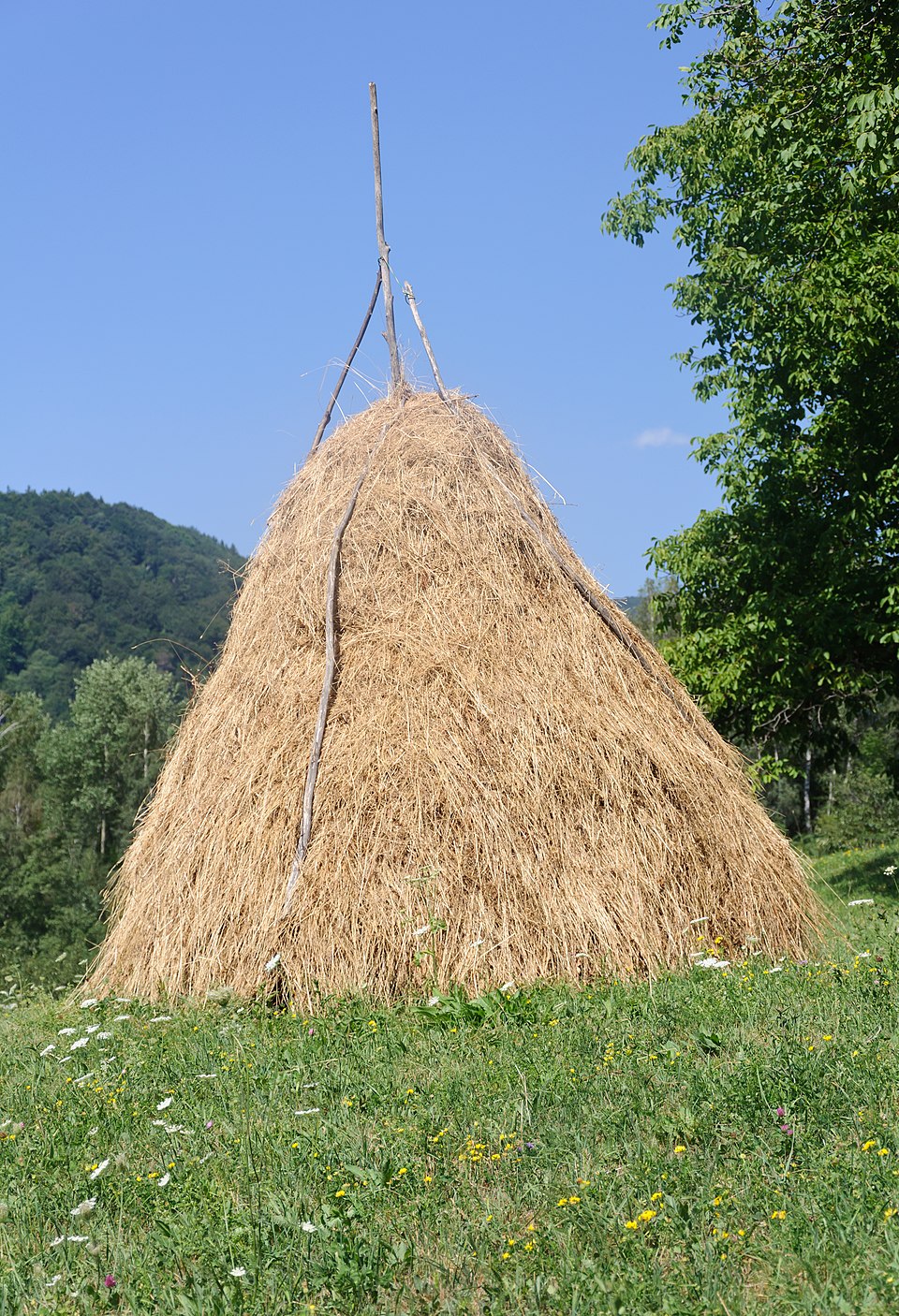
The image of a towering, conical haystack, nestled against a backdrop of rolling fields, is an iconic symbol of agricultural heritage. For millennia, these impressive structures were not just picturesque farm features but vital lifelines, ensuring livestock survival through harsh winters. Before the age of advanced machinery, the art of building and maintaining
haystacks was a specialized skill, passed down through generations. Today, while the traditional haystack has largely given way to the ubiquitous hay bale, its story offers a fascinating glimpse into humanity's enduring quest to efficiently store nature's bounty.
The Craft of the Traditional Haystack
At its heart, a traditional haystack was an ingenious feat of rural engineering designed to protect loose hay from the elements, primarily moisture, until it was needed. Typically, it featured a central wooden pole, around which layers of dried hay were meticulously stacked, forming a compact, weather-resistant mound. This central pole provided crucial stability and sometimes aided ventilation.
The success of a haystack hinged on the builder's profound understanding of hay's properties. Waterproofing was a critical, highly skilled task. By compressing the hay under its own weight and harnessing the slight heat generated by residual moisture during curing, farmers could create a dense outer shell that shed rain effectively. Many haystacks were built on slightly raised ground or atop a foundation of wood or brush, ensuring proper drainage and preventing spoilage from ground moisture. A simple fence or low wall often surrounded the base, serving a dual purpose: it kept curious cattle from eating the stored fodder prematurely and clearly demarcated the storage area. When winter arrived, the haystack would be opened, often with a large knife, and portions of hay would be removed daily to feed hungry animals. Some advanced designs even incorporated a moveable, waterproof cover, historically known as a Dutch roof or hay barrack, which could be lowered as the hay supply diminished.
Haystacks Through the Ages: A Vital Agricultural Necessity
The origins of the haystack stretch back to the very dawn of settled agriculture. From the Neolithic period, when humans first began domesticating animals and cultivating crops, the need to preserve fodder for livestock became paramount. Loose hay was the primary form of storage, and crude piles evolved into the more structured haystack as farming practices matured.
Initially, these structures were exclusively for loose hay. However, by the 1860s, their utility expanded to include sheaves of cereals, allowing them to dry further before threshing. Later, even low-density bales of hay or straw found a temporary home within these stacks. Farmers utilized different types of haystacks based on their needs:
* **Small Field Haystacks:** These were often built directly in the meadow, serving as temporary drying stations for freshly cut hay. Once sufficiently dry, the hay could either be fed to animals on-site or transported back to the farm for longer-term storage.
* **Large Storage Haystacks:** These majestic structures represented the final storage solution for hay and straw, often located near the farmstead but at a safe distance from other buildings to mitigate fire risks. They were crucial for ensuring a steady supply of feed throughout the non-growing seasons.
* **Early Silage Stacks:** In some regions, haystacks were even adapted for early forms of silage production. By loading hay into a stack and covering it with an impermeable material, farmers could ferment the fodder, preserving its nutritional value. This practice is echoed in modern stack silos or "molehill" silos, particularly noted in places like Quebec.
The transition from the field to the storage area was a labor-intensive process. Loose hay was collected and transported, often by hand or with simple tools, to a designated, usually slightly elevated spot where the haystack would be formed. This systematic approach, honed over centuries, underscored the haystacks' critical role in the survival and prosperity of farming communities.
The Bale Revolution: From Stacks to Mechanized Efficiency
The mid-20th century ushered in an agricultural revolution, and the traditional haystack, for all its historical significance, began its slow decline. The advent of mechanized baling equipment fundamentally transformed farm storage. Balers allowed farmers to compress hay or straw into dense, manageable packages – first small rectangular bales, then larger round or square bales.
This shift brought a host of advantages that traditional haystacks simply couldn't match:
* **Efficiency:** Baling dramatically reduced the labor and time required for harvest and storage.
* **Portability:** Bales are uniform, easy to handle (especially with machinery), and transport.
* **Reduced Spoilage:** Densely packed bales are less susceptible to moisture penetration and spoilage compared to loose hay, though they still require proper storage (often under cover).
* **Space Optimization:** Bales can be stacked much more uniformly and compactly, optimizing storage space in barns or sheds.
* **Safety:** While haystacks posed fire risks, modern baled hay, especially when stored correctly, generally presents fewer hazards than large, unprotected loose hay piles.
Today, the sight of traditional
haystacks is rare, mostly confined to historical farms, educational demonstrations, or niche practices. The landscape of modern agriculture is dominated by rows of wrapped round bales or neatly stacked square bales, testament to an ongoing drive for efficiency and productivity.
More Than Just Farm Storage: The Enduring Legacy of "Haystacks"
While the physical haystacks may have faded from widespread use, the term and its cultural echoes persist. Indeed, the very word "haystack" itself sometimes refers to smaller, conical piles of cut hay, particularly when used interchangeably with terms like "haycock" or "stook." These smaller versions are often temporary, awaiting consolidation into larger stacks or collection.
Perhaps one of the most intriguing enduring legacies of the name "Haystacks" is found far from the agricultural fields, in the dramatic landscapes of the English Lake District. Here, "Haystacks" refers to a prominent fell – a mountain or hill – in Cumbria. Rising to 597 meters (1,958 feet), this rugged peak, with its rocky outcrops and numerous small tarns, is famed for its stunning beauty. It held particular significance for Alfred Wainwright, the renowned fell-walking author whose "Pictorial Guides to the Lakeland Fells" popularized hiking in the region. Haystacks was Wainwright's favorite fell, a place he celebrated for its dramatic contours and breathtaking views. So deep was his affection that he requested his ashes be scattered at Innominate Tarn, a small lake nestled within its rugged summit. This remarkable convergence of an agricultural term and a majestic natural landmark highlights how words, like landscapes, can hold layered meanings and enduring cultural significance. You can learn more about this beloved landmark at
Haystacks Fell: Wainwright's Beloved Lake District Icon.
In conclusion, the journey from haystacks to bales is a compelling narrative of agricultural evolution. It illustrates humanity's ingenuity in adapting to challenges, from mastering the ancient craft of preserving fodder with natural methods to embracing technological advancements for unprecedented efficiency. While the traditional haystack may be largely a relic of the past, its legacy lives on – not just in our collective memory of rural life, but also in the very language we use, reminding us of a time when the careful stacking of hay was an art, a science, and a fundamental cornerstone of survival.